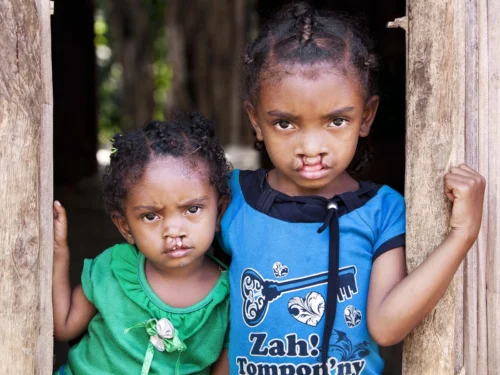
Operation Smile has been working in Madagascar since 2007, providing safe and high-quality care for children affected by cleft conditions. Since then, our organization has delivered surgeries to ∼4,300patients.
Given the levels of malnutrition in the country, Operation Smile enrolls patients in nutrition programs to ensure that they are healthy enough to undergo surgery. Operation Smile’s nutrition bootcamps provide patients and their families with nutrition counseling, workshops and follow-up care as well as formulas and therapeutic foods.
But there’s more to do.
In Fiscal Year July 2025-June 2026, Operation Smile will invest $1.5 million to perform life-changing surgery for nearly 420 patients and provide training for approximately 590 health workers.
Over the course of the next five years, Operation Smile will provide surgery for approximately 3,200 patients and deliver comprehensive cleft care consultations for approximately 4,880 patients.
Cleft Care Programs
Operation Smile projects to provide surgical care for nearly 420 patients. We will expand our comprehensive cleft care model to provide multidisciplinary services to patients before and after cleft surgery, delivering consultations in oral health (450 patients), nutrition (240 patients), psychosocial care (235 patients) and speech therapy (310 patients).
Education Programs
Operation Smile aims to provide specialty training for nearly 590 health workers in Madagascar. Operation Smile is increasing local capacity by training surgeons, anesthesiologists, pediatricians, nutritionists, nurses, biomedical technicians, psychosocial specialists, speech therapists, and oral health professionals. In partnership with the American Heart Association, we will deliver Basic Life Support training. Health Professionals’ knowledge and skills will be advanced through skill assessments and a structured competency pathway. We are developing partnerships with medical schools to co-create two-year specialty fellowships to train new providers. 775 caregivers in Madagascar will also be equipped with the knowledge and tools to support children throughout their cleft care journey.
Operation 100, our bold strategy to bring essential surgical care closer to patients’ homes, will impact Madagascar this year as we equip a cleft operative team at CHU Analankininina in Tamatave with advanced skills, essential equipment and enhanced health care infrastructure.
THE NEED
1 in 2,000 births. In Madagascar, it is estimated that one in every 2,000 children is born with a cleft condition.
Financial burden. 80% of the population is at risk of impoverishing expenditure for surgical care, while nearly 60% faces catastrophic expenditure for surgical care. Out-of-pocket expenses often prevent people with cleft conditions from accessing care. According to an Operation Smile survey, 97% of patients arriving at Operation Smile programs live below the poverty line and 99% have no health insurance. Operation Smile’s survey also revealed that 87% of patients arriving at Operation Smile programs in Madagascar could not have undergone surgery without the support of Operation Smile.
Shortfall of health workers. At the national level, there is only one specialist surgical worker per 100,000 people, which falls short of the Lancet Commission’s minimum target of 20 providers per 100,000. Madagascar faces a critical shortage of medical providers in rural areas, with many doctors migrating to urban centers in search of better-paying jobs.
Limited capacity for safe surgery. The Lancet Commission proposed that, to meet populations’ needs, countries should perform 5,000 surgical procedures per 100,000 population. In Madagascar, doctors perform just 163 surgical procedures per 100,000. The backlog of patients in need of surgery is exacerbated by the lack of critical infrastructure. Madagascar has just 0.2 hospital beds per 1,000 people, while the world average is 2.8 beds.
2-hour access to safe surgery. The Lancet Commission on Global Surgery proposed that at least 80% of a country’s population should be within two hours of a facility with essential surgery and anesthetic services. In Madagascar, only half of patients arriving at Operation Smile programs can access a surgical facility within two hours. Environmental factors such as floods and droughts create additional barriers for people seeking care.
Barriers to education and employment. In Madagascar, 32% of patients arriving at Operation Smile programs said that their condition limited their school attendance, while 30% said that their school performance is impacted by their condition. Additionally, 38% of caretakers stay home with their children, creating an additional financial strain for families.
BRINGING CARE CLOSER TO HOME
To ensure that every child has access to care close to home, we equip the providers within our patients’ communities with skills and resources to deliver high-quality care. We strengthen health system capacity by harnessing the talent and resources concentrated in larger cities, the hubs, to train providers in under-resourced areas, the spokes, where access to care is most limited.
Madagascar’s hub is based in the largest hospital in the country, CHU-JRA (Centre Hospitalier Universitaire Joseph Ravoahangy Andrianavalona). CHU-JRA, located in Madagascar’s capital of Antananarivo, serves as the country’s top referral hospital.
Operation Smile provides care at our hospital partner CHRR (Centre Hospitalier DeReference Régional). Located in Antsirabe, CHRR serves a direct catchment area of over 200,000 people and is a referral hospital for an additional two million people in the region.
Operation Smile also provides care at hospital partners CHUAT in Tamatave and CHU-PZAGA in Mahajanga.
FIVE-YEAR VISION
In the next five years, Operation Smile will provide surgery for approximately 3,200 patients and deliver comprehensive cleft care consultations for approximately 4,880 patients in the next five years.
Operation 100, our bold strategy to bring essential surgical care closer to patients’ homes, will impact Madagascar as we equip cleft operative teams at Centre Hospitalier Universitaire Joseph Ravoahangy Andrianavalona and Centre Hospitalier de Soavinandriana in Tana, Centre Hospitalier de Référence Régionale de Vakinankaratra in Anstirabe and Centre Hospitalier Universitaire PZaGa Androva in Majunga with advanced skills, essential equipment and enhanced health care infrastructure over the next five years.
Over the next five years, Operation Smile will advocate for the creation and implementation of a National Cleft Care Protocol in Madagascar, positioning cleft care as a strategic public health priority. Efforts will also focus on addressing cultural barriers to seeking care and raising awareness of cleft conditions through campaigns, patient advocacy programs and promotion of the National Registry of cleft conditions. In addition, Operation Smile will partner with local and international universities to conduct cleft-related research and collect data that strengthens the quality of care.