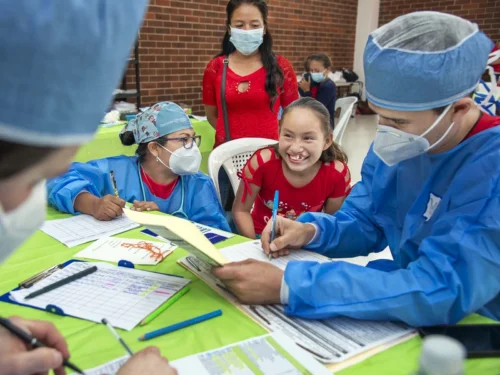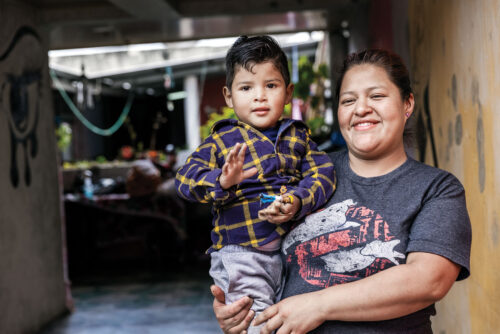

Operation Smile has been working in Guatemala since 2011 to provide safe surgery and comprehensive care for children born with cleft conditions. Since then, our organization has provided care to over 1,640 patients.
But there is more to do.
During Fiscal Year July 2025-June 2026, Operation Smile will invest $1.3 million to deliver surgery to over 420 patients and provide education and training for nearly 280 health workers.
In the next five years, Operation Smile will deliver surgery to approximately 2,000 patients and provide comprehensive cleft care consultations for approximately 11,000 patients.
Cleft Care Programs
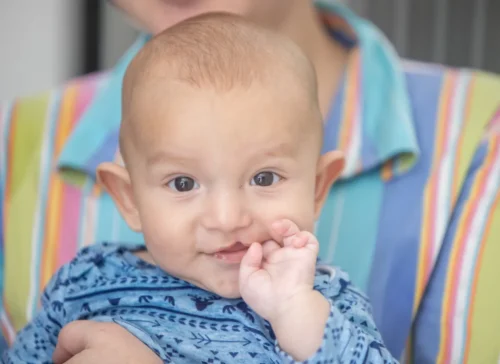
Operation Smile projects to deliver life-saving surgeries for over 420 patients in Guatemala. We will expand comprehensive cleft care by providing consultations in oral health (1,400 patients), nutrition (1,480 patients), speech therapy (nearly 1,250 patients) and psychosocial care (1,960 patients). As part of our nutrition program, Operation Smile will provide nutrition kits for newborn patients suffering from malnutrition. Awareness campaigns are planned to reach patients in remote areas in need of care.
Education Programs
Operation Smile will equip providers to deliver cleft surgery and comprehensive care for patients in their communities. We will provide education and training opportunities to nearly 280 medical professionals, strengthening cleft surgery capacity at hospitals nationwide. In collaboration with the American Heart Association, we will provide specialized training. In addition, opportunities such as Surgical Training Rotations and Visiting Professorships will support professionals in surgery, anesthesia, pediatrics, nursing, nutrition and biomedical technology.
THE NEED
Limited access to surgery. The Lancet Commission on Global Surgery recommends that countries should provide 5,000 surgeries per 100,000 people to meet population surgical needs. Guatemala falls short of this benchmark, performing only 1,505 surgeries each year. The Lancet Commission on Global Surgery suggests that at least 80% of a country’s population should be within two hours of a facility with essential surgery and anesthetic services. According to Operation Smile’s survey, 43% of patients arriving at Operation Smile programs in Guatemala do not have a hospital within two hours of their home. Our survey revealed that 81% of patients arriving at Operation Smile programs in Guatemala could not have undergone surgery without the support of Operation Smile.
Surgical provider shortage. Guatemala has just one specialist surgical worker per 100,000 population, well short of the Lancet Commission’s minimum of 20 providers per 100,000 people.
Financial burden. Out-of-pocket costs frequently prevent families from accessing the treatment they need. An estimated 18% of the population is at risk of impoverishing expenditure for surgical care, and nearly 34% faces catastrophic expenditure for surgical care, pushing patients into even greater vulnerability. Guatemala’s relative economic stability has not resulted in income growth, with nearly half of the population living in poverty or below the upper-middle income poverty line. 59% of patients arriving at Operation Smile programs live below the poverty line and 91% have no health insurance. In addition, 34% of caretakers stay home with their child, creating an additional financial strain for families.
Persistent malnutrition. Guatemala has the sixth-highest rate of chronic malnutrition in the world. 46% of all children under the age of five are affected by chronic childhood malnutrition and stunting, which puts patients with cleft conditions at an even higher risk.
BRINGING CARE CLOSER TO HOME
To ensure that every child has access to care close to home, we equip the providers within our patients’ communities with skills and resources to deliver high-quality care. We strengthen health system capacity by harnessing the talent and resources concentrated in larger cities, the hubs, to train providers in under-resourced areas, the spokes, where access to care is most limited.
Hospital Juan Pablo II in Guatemala City serves as a hub where Operation Smile’s education partners and comprehensive care center are located.
The spokes are at Regional Hospital San Benito in Petén and the Regional Hospital in Escuintla. An additional spoke hospital will be established this year, extending our reach to more patients.
FIVE-YEAR VISION
Over the next five years, Operation Smile will deliver surgery to approximately 2,000 patients. We will provide more than 120,000 consultations across various specialties.
To address barriers to care, Operation Smile Guatemala has developed a five-year strategy to decentralize medical services for rural areas. This plan uses the hub-and-spoke model to provide surgical and non-surgical care in partnership with key stakeholders. Together, we will identify patients and hospitals while leveraging our education programs and global volunteer base to support local capacity building and strengthen the health system.
In order to develop self-sufficiency at spoke hospital partners, Operation Smile will combine care delivery programs with education and training programs that build Guatemala’s surgical workforce. We will train five cleft teams in quality cleft care to establish ongoing hospital-based programs. Our goal is to grow our local volunteer base to 160 individuals.
Operation 100, our bold strategy to bring essential surgical care closer to patients’ homes, will impact Guatemala as we equip cleft operative teams in Guatemala City, Escuintla and Peten with advanced skills, essential equipment and enhanced health care infrastructure over the next five years.