Since 2009, Operation Smile has delivered reconstructive surgery for over 1,800 patients.
But there is more to do.
In Fiscal Year July 2025-June 2026, Operation Smile will invest $437,400 to deliver surgery to 190 patients and provide education and training for 150 health workers.
Cleft Care Programs
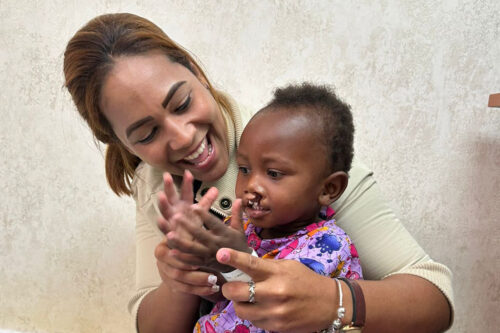
Over the course of the fiscal year, Operation Smile will provide surgical care for 190 patients. We will expand comprehensive cleft care services by delivering consultations oral health (∼540 patients), nutrition (170 patients), speech therapy (80 patients), and psychosocial care (∼90 patients). All programs will be supported by our network of nearly 270 volunteers.
Education Programs
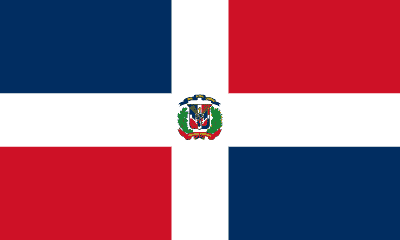
We will increase access to medical education in the Dominican Republic by providing education and training for 150 health workers in the fields of surgery, anesthesia, pediatrics, nursing, speech, oral health and biomedical technology. Additionally, in collaboration with the American Heart Association, we will deliver basic life support courses.
THE NEED
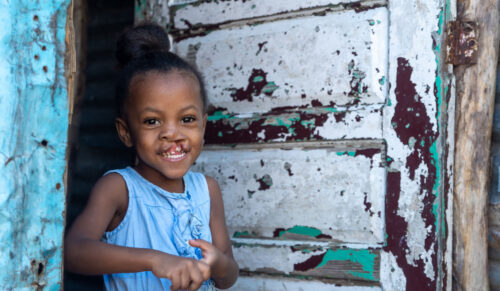
One in 1,090. In the Dominican Republic, one child is born with a cleft condition for every 1,090 births.
Unequal access to care. Urban centers such as Santo Domingo have many large and well-equipped hospitals, while people living in rural areas suffer from limited access to quality health care. As a result, 47% of patients who arrive at Operation Smile programs do not have a hospital within two hours of their home. Being an island country, the Dominican Republic experiences the detrimental effects of climate change, including rising temperatures, drought and high rates of mosquito-carried diseases, which disproportionately affect people living in poverty and create additional barriers to health care for children living with cleft conditions. Operation Smile’s survey revealed that 86% of patients arriving at Operation Smile programs in the Dominican Republic could not have undergone surgery without the support of Operation Smile.
Financial burden. Out-of-pocket expenses often prevent people from accessing the care that they need, which puts children living with cleft conditions at an even greater risk. 6% of the population faces impoverishing expenditure for surgical care, while 14% faces catastrophic expenditure for surgery.
Barriers to education and employment. In the Dominican Republic, 35% of patients who arrive at Operation Smile programs reported that their condition affected their school attendance, and 46% of caregivers stay home to care for their children.
BRINGING CARE CLOSER TO HOME
To ensure that every child has access to care close to home, we equip the providers within our patients’ communities with skills and resources to deliver high-quality care. We strengthen health system capacity by harnessing the talent and resources concentrated in larger cities, the hubs, to train providers in under-resourced areas, the spokes, where access to care is most limited.
In the Dominican Republic, our hub inHospital Militar Dr. Ramón de Lara in Santo Domingo provides year-round surgical care for patients with cleft conditions.
We have a spoke in Santiago at Hospital Infantil Arturo Grullon.
We deliver non-surgical care at our Operation Smile Care Center in Santo Domingo.
We deliver non-surgical care at our hospital partner, Sarah Lora’s Clinic in Santiago.
FIVE-YEAR VISION
Over the next five years, Operation Smile will deliver surgical care to ∼1,430 patients. We will work to recruit 1,425 new patients nationwide.
We plan to leverage the capacity of three hospitals, opening one hub and two spokes, to increase access to care across the country. Operation Smile will leverage the resources and expertise from the hubs to enable the provision of safe and quality care at the spoke hospitals. In the next five years, we will conduct 19 surgical programs and establish five new student clubs.
Operation 100, our bold strategy to bring essential surgical care closer to patients’ homes, will impact the Dominican Republic as we equip cleft operative teams at Military Hospital Dr. Ramon de Lara and Military Hospital of the Armed Forces in Santo Domingo and Arturo Grullon Pediatric hospital in Santiago with advanced skills, essential equipment and enhanced health care infrastructure over the next five years.