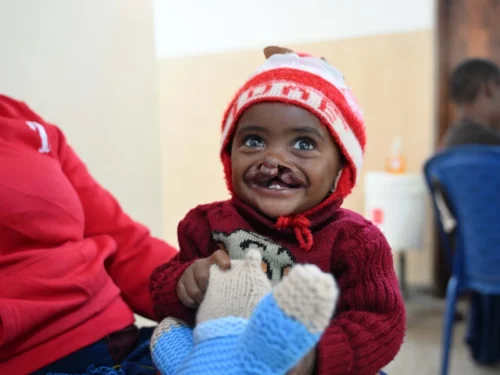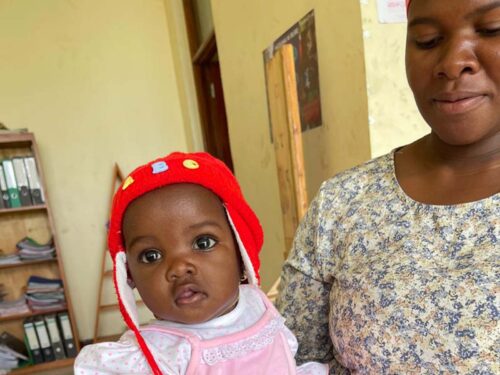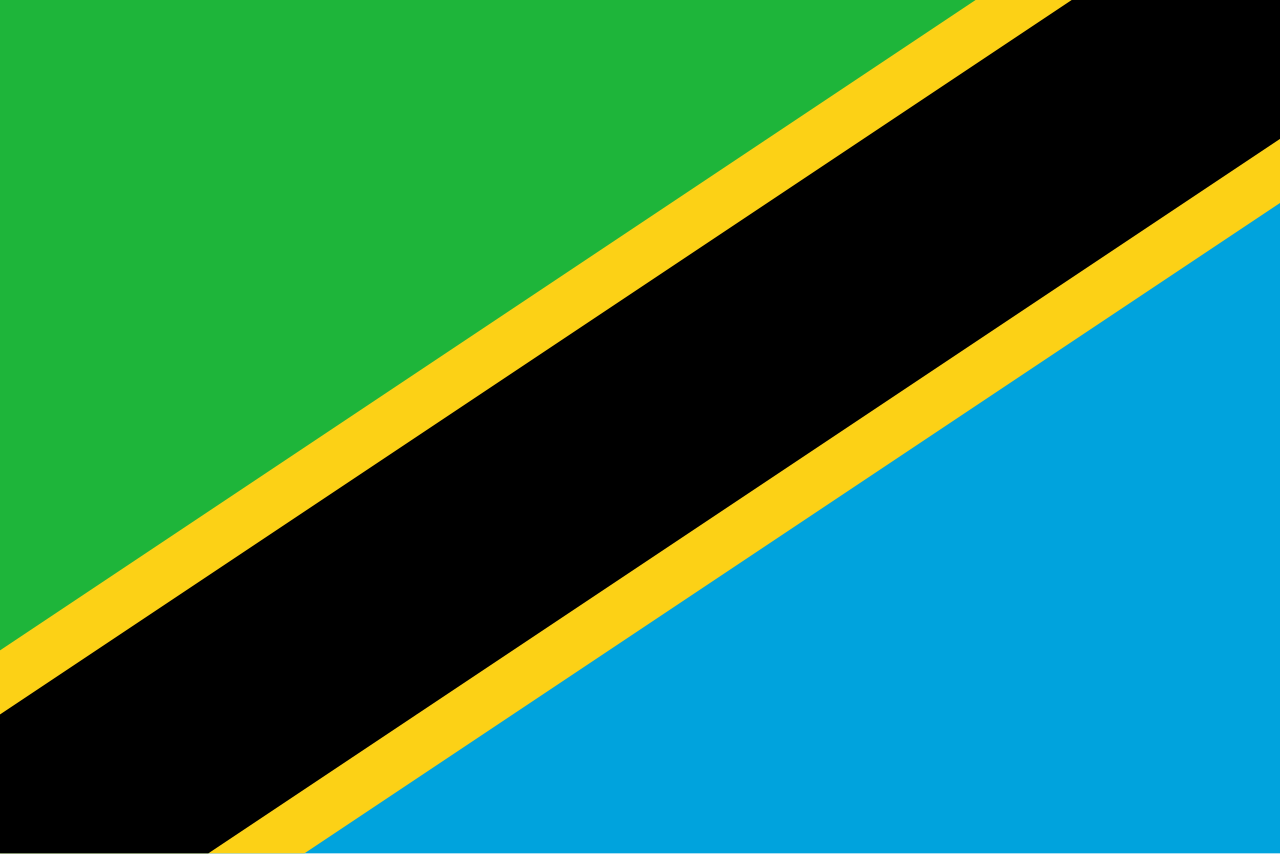
In 2024, Operation Smile established a presence in Tanzania to provide high-quality care for children born with cleft conditions.
To increase access to surgery and care, Operation Smile plans to enhance access to medical education and care delivery in underserved areas.
During Fiscal Year July 2025 – June 2026, Operation Smile will invest $620,300 to deliver life-changing surgical care for 120 patients and provide training for over 200 health workers.
Cleft Care Programs
Over the next fiscal year, Operation Smile will provide surgical care to 120 patients, along with nutrition consultations for another 16 patients. To support this effort, we will recruit patients through printed materials, radio and television programs, as well as establish a comprehensive patient database.
Education Programs
More than 200 health workers in Tanzania will take part in training and education programs designed to elevate standards of surgical care and patient safety. In collaboration with the American Heart Association, providers will complete Basic Life Support training to strengthen their ability to respond to critical emergencies. Specialized training will be offered to surgeons, nurses, anesthesiologists, biomedical technicians, pediatricians, speech providers, nutritionists and community health workers. Additionally, 8,000 caregivers will gain the knowledge and skills needed to support their child throughout the cleft care journey.
THE NEED
One in 600 births. In Tanzania, one child is born with a cleft condition per every 600 births – approximately 2,500 children annually. Only 43% of newborns receive postnatal care. As a result, many babies born with cleft conditions are not properly diagnosed or guided onto appropriate care pathways.
Lack of health workers and resources. Tanzania has a shortage of physicians (0.014 per 1,000 population), nurses and midwives (0.6 per 1,000 people) and specialist surgical workers (0.46 per 100,000 population). In 2019, there were reportedly only 22 anesthesiologists in the country, the equivalent of 0.05 specialist anesthesiologists per 100,000 population. Tanzania also suffers from limited essential surgical equipment, which creates further barriers to care for children born with cleft conditions.
Unequal access to care. Significant inequities exist in the distribution of practicing doctors, with 41% located in urban regions and 88% of surgical specialists employed by the six largest hospitals in the country. With 65% of Tanzanians residing in rural areas of the country, these residents rely heavily on local health facilities. These facilities often don’t receive access to the resources needed to safely treat patients. In rural areas, southern and southern-highlands parts of the country, some individuals must travel over 20 hours to reach a hospital.
Financial burden. Considering that 49% of Tanzanians live below the international poverty line, the cost of surgery presents a significant financial barrier to accessing care. Out-of-pocket expenses often prevent people from accessing the care that they need, which puts children living with cleft conditions at an even greater risk. 91% of the population faces impoverishing expenditure for surgical care, while 46% faces catastrophic expenditure for surgery.
BRINGING CARE CLOSER TO HOME
To ensure that every child has access to care close to home, we equip the providers within our patients’ communities with skills and resources to deliver high-quality care. We strengthen health system capacity by harnessing the talent and resources concentrated in larger cities, the hubs, to train providers in under-resourced areas, the spokes, where access to care is most limited.
In Tanzania, our hubs at Catholic University of Health and Allied Sciences (CUHAS) in Mwanza and Muhimbili University of Health and Allied Sciences (MUHAS) in Dar-es-salaam will provide year-round surgical care for our patients.
We currently have spokes in Iringa and Mtwara.
FIVE-YEAR VISION
Operation 100, our bold strategy to bring essential surgical care closer to patients’ homes, will impact Tanzania as we equip cleft operative teams in Iringa and Mtwara with advanced skills, essential equipment and enhanced health infrastructure.