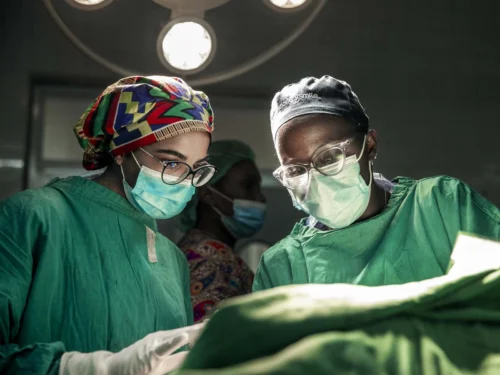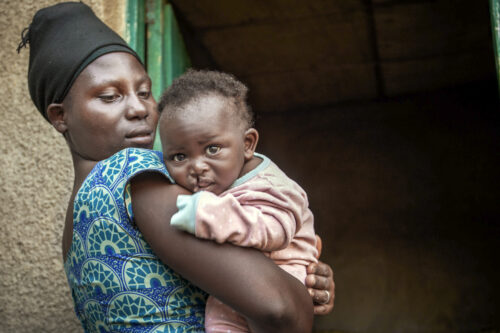
Operation Smile has been working in Rwanda since 2009, providing safe and comprehensive care for children born with cleft conditions and other reconstructive surgical conditions. Since then, we have delivered life-changing surgeries to more than 2,000 patients.
In 2013, Rwanda had only two plastic surgeons. Operation Smile has since helped to train 22 general surgeons in cleft and plastic surgery.
But there is more to do.
During Fiscal Year July 2025-June 2026, Operation Smile will invest $1.6 million to deliver life-changing surgical care for nearly 550 patients and provide training for over 1,160 medical providers.
Over the course of the next five years, Operation Smile will expand access to surgery across Rwanda by providing surgical care for approximately 1,200 patients.
Cleft Care Programs
Operation Smile plans to provide safe and high-quality surgery for over 550 patients. Operation Smile recognizes that a comprehensive care model should extend beyond surgery to support the complete rehabilitation and social inclusion of our patients. We plan to provide consultations in oral health (300 patients), speech (5 patients), nutrition (150 patients) and psychosocial care (240 patients).
Education Program, Infrastructure & Equipment
Partnering with Rwandan medical leaders and enabling access to education opportunities will allow local health systems to provide care to a greater number of patients in need of cleft and plastic surgery. Over the course of the fiscal year, we aim to deliver educational opportunities over 1,160 medical providers. We will provide training in surgery, microsurgery, physiotherapy, speech therapy, oral health, nursing and anesthesia, supported by mortality and morbidity training. In collaboration with the American Heart Association, providers will receive Basic Life Support training. Eight visiting professorships will bring global expertise in microsurgery, craniofacial, maxillofacial, cosmetic, hypospadias, burn treatment, general plastics and hand surgery. Plastic surgery residents at the University of Rwanda will benefit from scholarships and stipends that provide essential financial support for their education and clinical training.
THE NEED
Recovering health system. The Rwandan genocide against Tutsi committed in 1994, a campaign of mass murder over the course of 100 days, led to a severe public health crisis. The health care system was overwhelmed by the impact of hundreds of thousands of deaths and injuries and many doctors fleeing the country. Since then, the government has made enormous strides in training new health providers and achieving the goal of universal health care.
Financial burden. Despite significant progress in increasing access to health care, a large portion of the population remains medically vulnerable. 55% of the population is at risk of impoverishing expenditure for surgical care, while eight percent is at risk of catastrophic expenditure for surgery. With 49% of the 14.4 million people living in Rwanda falling below the poverty line, patients face financial barriers to receiving the care they need.
Lack of access to surgery. The Lancet Commission on Global Surgery proposed that, to meet populations’ needs, countries should achieve 5,000 surgical procedures per 100,000 people. In Rwanda, surgeons deliver just 512 surgical procedures per 100,000 population.
Deficit of medical providers. The health workforce shortfall contributes to the lack of access to care. Compared to high-income countries, which have an average of 10 nurses and midwives per 1,000 people, Rwanda faces a shortage, with just 0.9 nurses and midwives per 1,000 individuals. Rwanda has one specialized surgical worker per 100,000 people, which falls short of the Lancet Commission’s minimum target of 20 providers per 100,000 people.
Barriers to education and employment. Operation Smile’s survey revealed that people living with cleft conditions in Rwanda experience difficulties with obtaining education and employment. 41% of patients arriving at Operation Smile programs who have a cleft condition or burn said that they do not go to school due to their appearance. 70% living with a cleft condition or burn reported having a hard time finding work.
BRINGING CARE CLOSER TO HOME
To ensure that every child has access to care close to home, we equip the providers within our patients’ communities with skills and resources to deliver high-quality care. We strengthen health system capacity by harnessing the talent and resources concentrated in larger cities, the hubs, to train providers in under-resourced areas, the spokes, where access to care is most limited.
In Rwanda, Operation Smile’s hub is based in Kigali at CHUK and the Rwanda Military Hospital.
Six district hospitals serve as spokes in Ruhengeri, Gisenyi, Kibuye, Bushenge, Kibungo and Rwinkwavu.
FIVE-YEAR VISION
Over the next five years, Operation Smile will provide approximately 1,200 surgeries and provide comprehensive care consultations in oral health, speech therapy, nutrition and psychosocial care.
In partnership with the Ministry of Health, Operation Smile co-created a five-year strategy to address the country’s surgical needs, with a focused investment in plastic surgery and anesthesia training. As part of this strategy, two Hubs and six Spokes were selected in alignment with the desired attributes outlined in Operation 100. These sites — Ruhengeri, Gisenyi, Kibuye, Bushenge, Kibungo and Rwinkwavu — will receive targeted support to equip cleft operative teams with advanced skills, essential equipment and enhanced health care infrastructure.
Education is embedded throughout the plan, with every surgical program incorporating training components. We are collaborating closely with teaching hospitals and existing residency programs.
A major advantage in Rwanda’s model is that trained plastic surgeons and biomedical engineers are placed directly into district hospitals by the government, significantly advancing surgical access and ensuring long-term sustainability.
In the next five years, we will strengthen surgical capacity so that no child or family has to travel far or wait too long for the care they need. Rwanda demonstrates how country-led strategic planning can align with our global strategy, while adapting to local context for maximum impact.