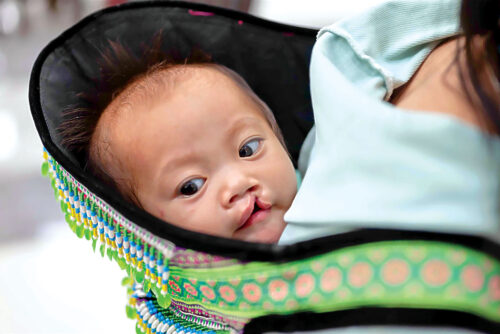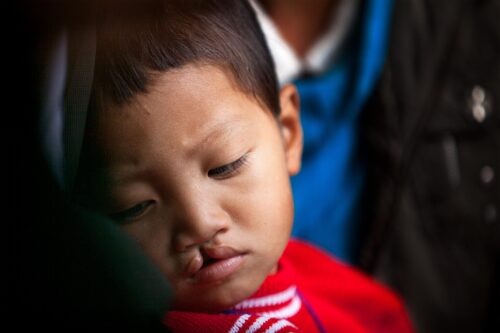

A group of 38 medical volunteers came to Vietnam in 1989 to provide care for children affected by cleft conditions. This was the largest group of Americans to enter the country since the end of the U.S.-Vietnam conflict in 1975, and it marked the start of Operation Smile’s programs in Vietnam.
Over the past 35 years, Operation Smile Vietnam has provided clinical care for around 60,000 patients.
But there is more to do.
In Fiscal Year July 2025-June 2026, Operation Smile will invest $1.1 million to provide surgical care for 2,540 patients and train over 800 health workers.
In the next five years, Operation Smile will provide surgery for~14,000 patients and deliver comprehensive cleft care services for ~40,000 patients.
Cleft Care Programs
Over the course of the fiscal year, Operation Smile will deliver surgery to 2,540 patients. We will expand comprehensive cleft care in Vietnam by providing consultations in speech therapy for 780 patients, in nutrition for 120 patients and in oral health for approximately 6,220 patients. Operation Smile will also provide oral hygiene education and basic dental services at primary schools in rural provinces.
Education Programs
Operation Smile will deliver training for over 800 medical providers, which will increase access to cleft care across the country. Operation Smile will train providers in the fields of surgery, anesthesia, pediatrics, nursing, speech therapy, oral health, biomedical technology and others. We will provide Life Support training in collaboration with the American Heart Association. In partnership with ZimVie, Operation Smile will host its fourth annual dental symposium for university dental students. The symposium will feature the latest techniques and topics in advanced dentistry, along with providing oral surgery and implant clinical programs for patients.
THE NEED
Backlog of 25,000 patients. In Vietnam, over 9,500 newborns are born annually with a cleft condition. Operation Smile estimates that there is a backlog of 25,000 people impacted by a cleft condition in Vietnam.
Shortage of medical providers. The country’s health care system faces a critical shortage of medical providers, including specialists trained in comprehensive cleft care. Some hospitals in Vietnam have an average of 1.3 to 2 nurses per doctor, with each nurse caring for 10 to 15 people, which is much lower than the minimum staffing level. Health facilities in urban centers attract medical providers from rural hospitals, leading to a shortfall of qualified personnel in many regions of Vietnam.
Barriers to care. Out-of-pocket costs often prevent patients from reaching cleft care. 19% of the population is at risk of impoverishing expenditure for surgical care, while nearly a quarter faces catastrophic expenditure in case of surgical care. The absence of national policies or strategic decision-making in the field of cleft treatment leaves behind thousands of children born with cleft lip and cleft palate.
BRINGING CARE CLOSER TO HOME
To ensure that every child has access to care close to home, we equip the providers within our patients’ communities with skills and resources to deliver high-quality care. We strengthen health system capacity by harnessing the talent and resources concentrated in larger cities, the hubs, to train providers in under-resourced areas, the spokes, where access to care is most limited.
In Vietnam, our hubs are located in Ho Chi Minh City at the National Hospital of Odonto-Stomatology and in Hanoi at the Vietnam Cuba Friendship Hospital.
Operation Smile has a spoke in Ho Chi Minh City at My Thien Hospital.
We also have partnerships with hospitals that host short-term surgical programs in Son La, Nghe An, Quang Ngai, Gia Lai, Hanoi and Ho Chi Minh City.
We have established partnerships with institutions that provide oral health services in Hue, Quang Nam, Quang Ngai, Nghe An, Dak Lak, Son La and Hanoi.
FIVE-YEAR VISION
Over the next five years, Operation Smile will address barriers to seeking and reaching cleft care in Vietnam. We aim to provide surgical care for approximately 14,000 patients and deliver comprehensive care services to approximately 40,000 patients. We will work to expand our system of hubs and spokes, building local capacity across the country. We will also create two new comprehensive cleft care centers.
Operation 100, our bold strategy to bring essential surgical care closer to patients’ homes, will impact Vietnam as we equip cleft operative teams at Quang Ngai Pediatric Hospital in Quang Ngai and Buon Ma Thuot Medical University Hospital in Dak Lak with advanced skills, essential equipment and enhanced health care infrastructure over the next five years.